For over 50 years, we have been manufacturing selective, dynamic, drive-in, and push-back racks, mezzanines, and custom solutions at our plant in northern Mexico. Our designs incorporate seismic considerations in accordance with RMI guidelines, hold MHI’s R-Mark certification, and serve customers throughout Mexico and the southern United States.
Manufacturing Expertise
Gómez Palacio, Durango
Active Certification
RMI Guidelines
USA, Mexico & Latam
CATALOG
RackUSA’s portfolio covers the entire industrial storage cycle: selective pallet racking for warehouses with a wide variety of SKUs, high-density systems for predictable inventory, vertical space utilization with mezzanines and self-supporting structures, long loads with cantilever racking, custom solutions, and light-gauge systems for retail and order picking. Each system is manufactured from structural or rolled steel, depending on the application, and is designed with a seismic factor incorporated into the plant.
3 systems
3 systems
01 . Direct Access
Sistemas con acceso a cada tarima desde el pasillo. Son la opción base cuando la operación maneja muchos SKUs y la rotación es mixta o no predecible. Diferentes variantes según el tipo de carga, la velocidad de instalación requerida y el entorno operativo.
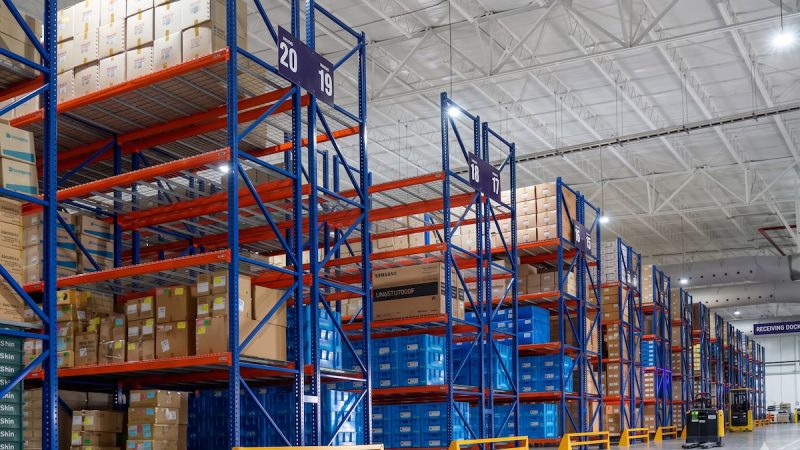
Sistema base de paletización con acceso directo a cada tarima. Configuración atornillada que se reconfigura cuando cambia el inventario. La opción más versátil para almacenes con alto número de referencias.
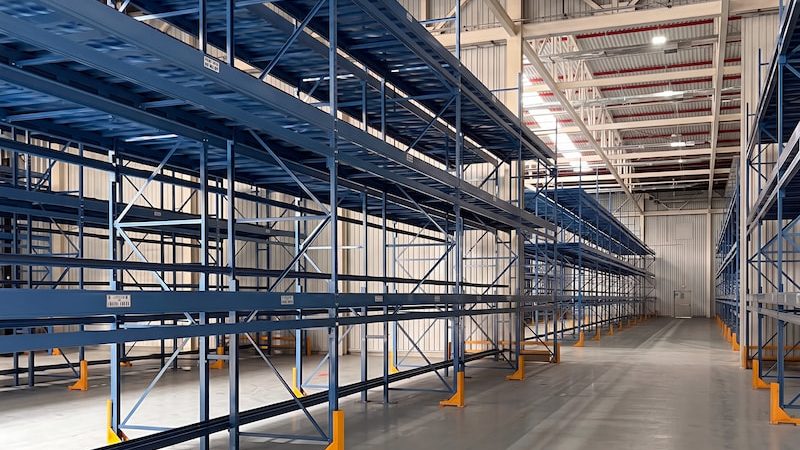
High-strength steel components. Designed for environments subject to frequent forklift impacts, cold storage rooms, corrosive environments, or loads exceeding 3 metric tons per level. Significantly longer service life under heavy-duty use.
02 . High Density
Systems that maximize the number of pallets per square foot when inventory turnover is predictable and SKUs are handled in batches. Each system follows a different flow logic: deep static storage, LIFO with rails, gravity-fed FIFO, or automation with pallet shuttles.
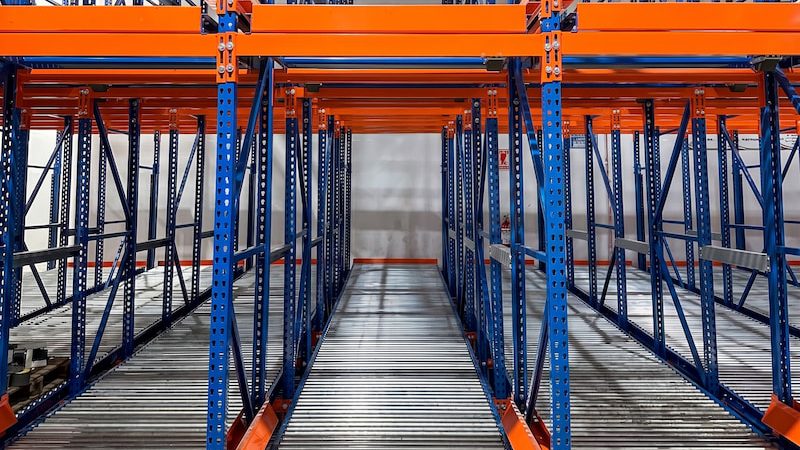
Dynamic configuration specifically designed for continuous gravity-fed pallet conveyors. Loading at one end, unloading at the other. Automatic FIFO rotation, ideal for industries with strict expiration dates, such as food, beverages, and pharmaceuticals.
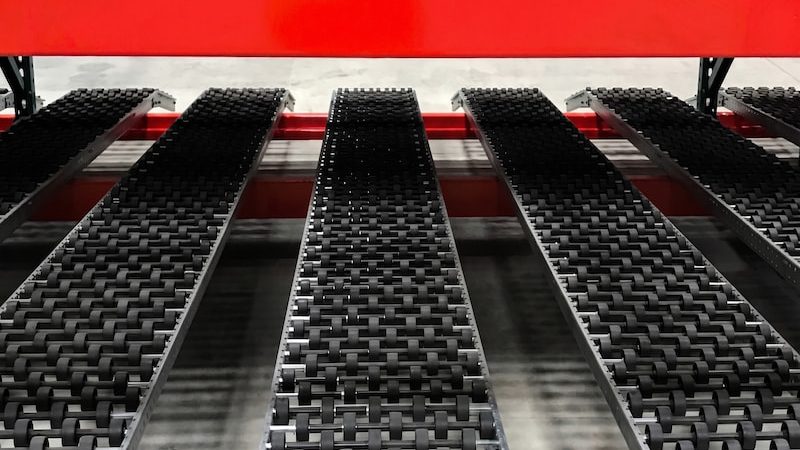
Gravity-fed version for individual boxes in picking areas. Restocked from the back, with products consistently presented to the operator at the front. Reduces order preparation times and improves the ergonomics of the workstation.
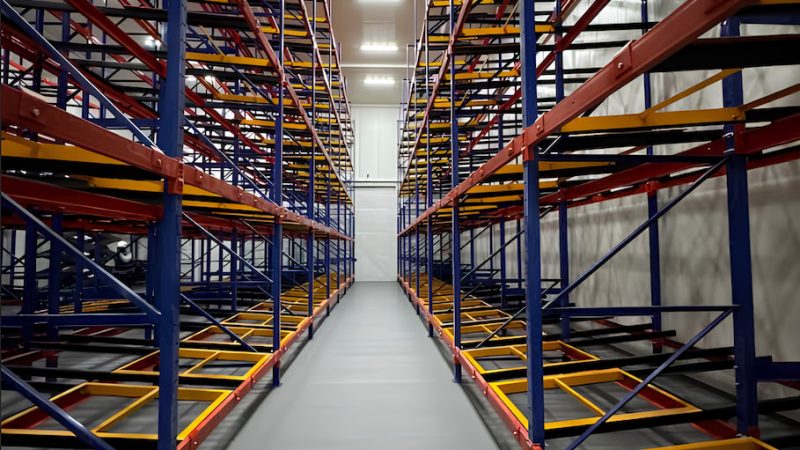
Inclined lanes with rail-guided carts that allow for storing up to 5 pallets deep using the LIFO method. The new pallet pushes the previous ones toward the back, and the forklift always operates from the aisle without entering the system.
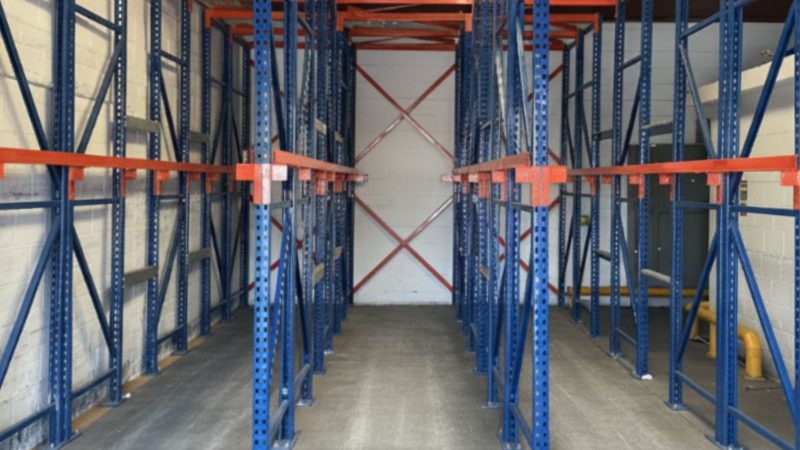
The forklift enters the structure via lanes to load and unload pallets. Drive-In operates on a LIFO basis with a single entrance; Drive-Thru operates on a FIFO basis with dual access. Suitable for high-density, homogeneous inventories.
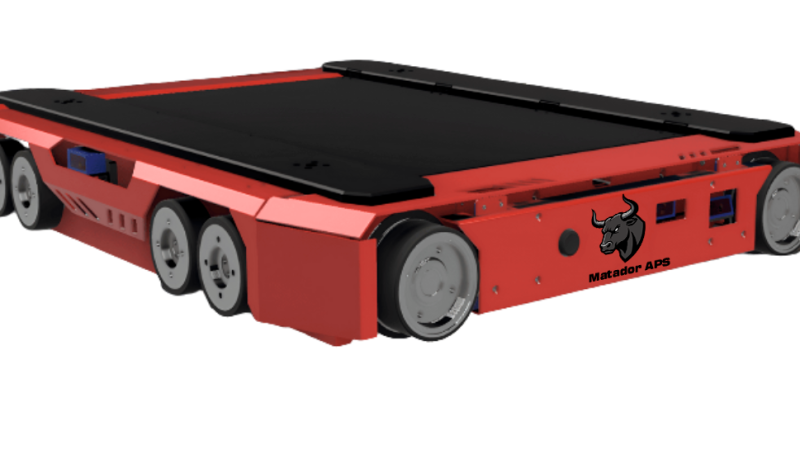
An automated cart that moves along tracks to load and unload pallets. Maximum portfolio density. Designed for high volume per SKU, extended shifts, and distribution centers with intense peaks in demand.
03. Vertical and Special Systems
Systems that address plant constraints: unused high ceilings, loads with atypical geometries, operations that require an additional level without civil engineering work, or material flows that do not fit into any standard system.
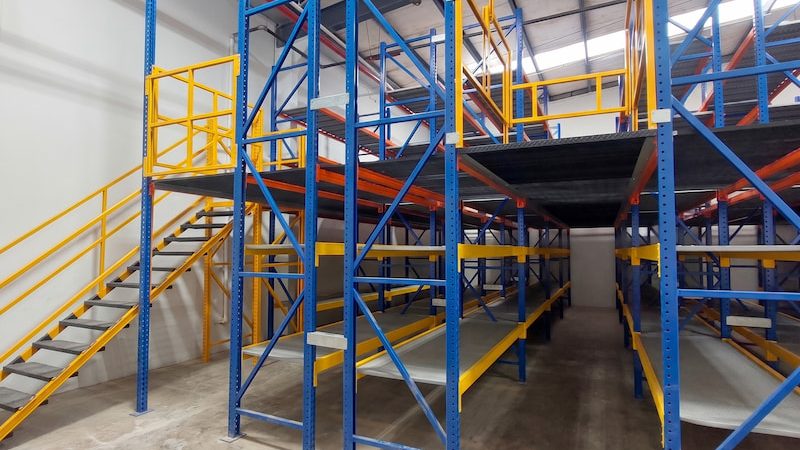
Systems that double or triple the usable area of a warehouse without altering the building’s structure. Suitable for picking areas, internal offices, value-added areas, or capacity expansion.
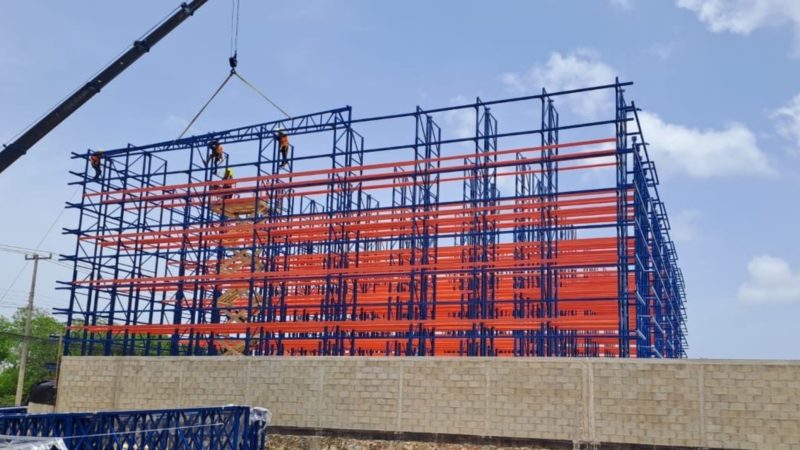
The rack structure supports the roof and exterior walls: the system and the building are one and the same. It allows for heights exceeding 10 meters and eliminates the need for a double investment in an industrial building and a rack.
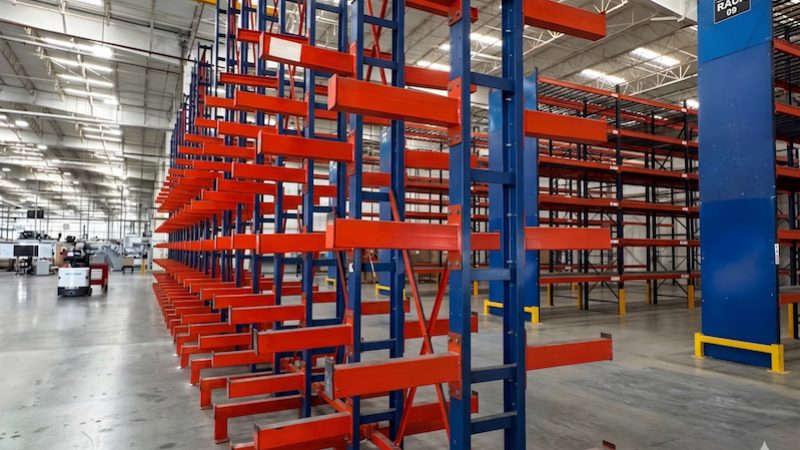
Cantilever arms mounted on a central column, with no obstructions in front. Designed for long loads such as metal profiles, pipes, rebar, wooden planks, or sheet metal. Can be configured on one or both sides depending on warehouse traffic flow.
04 . Light Duty
Complementary product lines for operations that do not handle heavy pallets or that require support equipment for any system in the catalog. Includes light-duty shelving, protective rack accessories, and gravity conveyors.
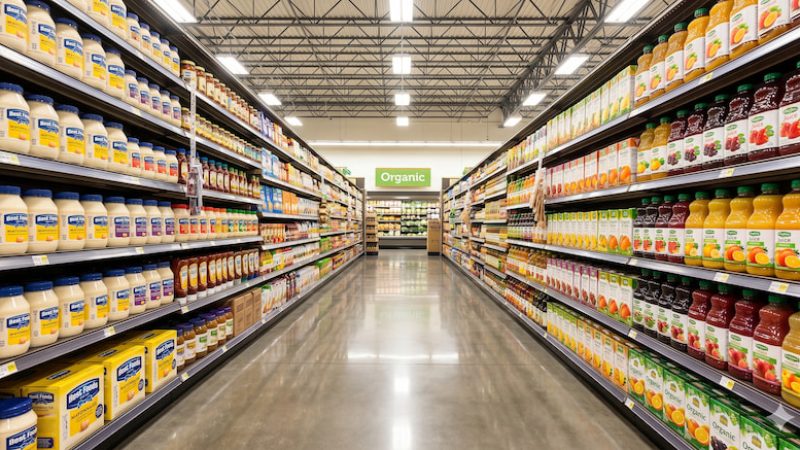
Sistemas de carga ligera y media: Bulk Rack, Tab, Rivet y wire decks (parrillas de alambre soldado). Apto para refacciones, archivo, e-commerce, talleres y almacenes pequeños o medianos donde no entra una tarima estándar.
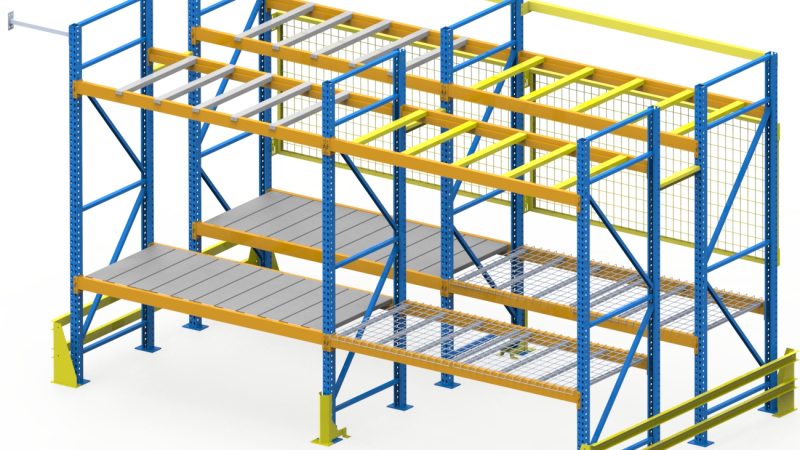
Rack protectors, wire decking, safety railings, guarding and safety panels, pallet dividers, and industrial signage. These products complement any system in the catalog and are part of our standard replacement line for warehouses in operation.
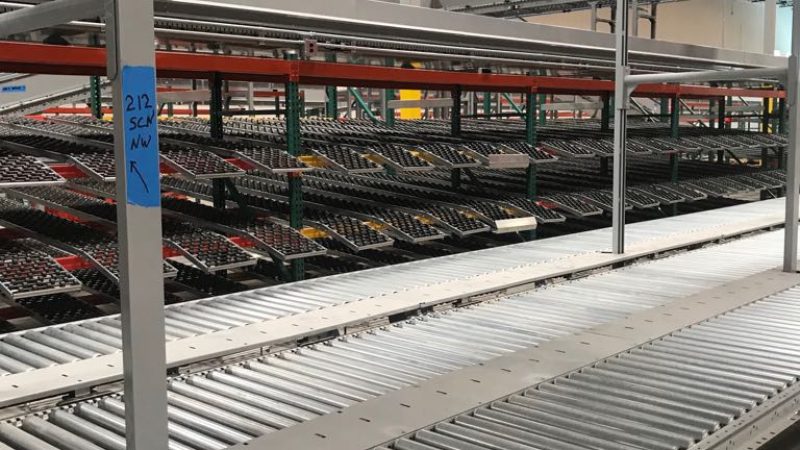
A motorless conveyor system for moving boxes or pallets between stations. It operates using a calibrated incline and requires no electricity. It can be integrated with any dynamic rack, picking area, or packaging line.
The decision depends on four variables: how many SKUs you handle, how predictable the turnover is, what density you need, and how heavy your loads are. This table compares the most representative systems in the catalog against the criteria that drive purchasing decisions in industrial warehouses.
| System | Relative Density | Access by SKU | Recommended rotation | Standard capacity/level | Installation Speed |
|---|---|---|---|---|---|
| Selective Racking | Low | Direct to each pallet | Mixed or unpredictable | 1 to 3 tons | High |
| Drive-In | High | By lane | LIFO, high density | 1 to 2 tons | Medium |
| Push-Back | High | By lane, max. 5 | LIFO, consolidated lots | 1 to 2 tons | Medium-low |
| Pallet Shuttle | Very High | By automated lane | FIFO or LIFO high volume | 1 to 2 tons | Low |
| Pallet Flow | High | By gravity | FIFO | 1 to 1.5 tons | Low |
| Mezzanine / Pick Module | Not applicable | By stairs or elevator | Picking and value-added | Varies by design | Medium |
If your operation doesn’t clearly fit into any category, a custom system or a combination of two categories is usually the answer. Talk to a specialist before making your final decision.
The product catalog is half the job. The other half consists of the preliminary engineering, installation, maintenance, and the documentation the customer needs to operate the product.
System design based on blueprints and SKUs, own-plant manufacturing, supervised installation, preventive maintenance, and reconfiguration when operations change. The same team handles everything from the initial survey to commissioning.
Technical data sheets, warranties, case studies, product line catalogs, and corporate presentations. All the downloadable documentation that a purchasing department or project engineer might need.
A selective storage system is best when you handle many SKUs and turnover is mixed or unpredictable. High-density systems (drive-in, push-back, pallet shuttle) are best when you have few SKUs per location, consolidated batches, and predictable turnover. The difference comes down to square meters per pallet: a selective storage system requires twice as much space to store the same number of locations as a drive-in system.
It depends on the type of rack. Standard selective racking operates at 1 to 3 metric tons per level; heavy-duty structural racking exceeds 3 metric tons; selective racking and metal shelving are designed for lighter loads. The final design is calculated based on the actual pallet weights and the clear height of the warehouse.
Yes. All systems are designed with seismic factors in accordance with RMI (Rack Manufacturers Institute) and Seizmic guidelines. The calculations take into account the seismic zone where the warehouse is located, the total load of the system, and the geometry of the uprights, beams, and connectors.
The timeline varies depending on the volume, the chosen system, and the accessibility of the site. As a general guideline: a selective roll-in system is installed faster than one secured with brackets; a drive-in or push-back system takes longer due to the rail components; and a pallet shuttle system also requires commissioning of the cart. The project team provides a fixed schedule along with the quote.
Selective systems can be reconfigured without sacrificing components: beam heights are adjusted, levels are changed, and the layout is rearranged. High-density systems are less flexible because the rail structure is calibrated for a specific operation. It is worth considering this factor before making a choice.
In-house manufacturing. The plant is located in Gómez Palacio, Durango, Mexico, and has been in operation since 1972. The entire line of selective, dynamic, drive-in, push-back, mezzanine, cantilever, and custom racks is manufactured there. The company’s sales coverage includes all of Mexico, as well as offices in Texas and California.
Fill out our contact form and find out how to transform your warehouse. A specialist will respond within four business hours with an initial proposal based on the information you provide.
Our team will respond to your request as soon as possible.

 Racking
 Selective: Roll-Formed
 Selective: Structural
 Cantilever
 Dynamic: Carton-Flow
 Dynamic: Pallet-Flow
 Dynamic: Push-Back
 Pallet Shuttles (CS)
 Mezzanine | Pick Modules (CS)
 Rack Supported Buildings (CS)
 Gravity Conveyor (CS)
 Drive-In | Drive-Thru (CS)
 Shelving
 Shelving: Boltless Tab Rack
 Services