As supply chains expand and customer demand accelerates, businesses face growing pressure to
optimize large-scale storage. Traditional warehouse construction often struggles to balance real estate costs, flexibility, and scalability. That’s where
rack-supported warehouses come into play.
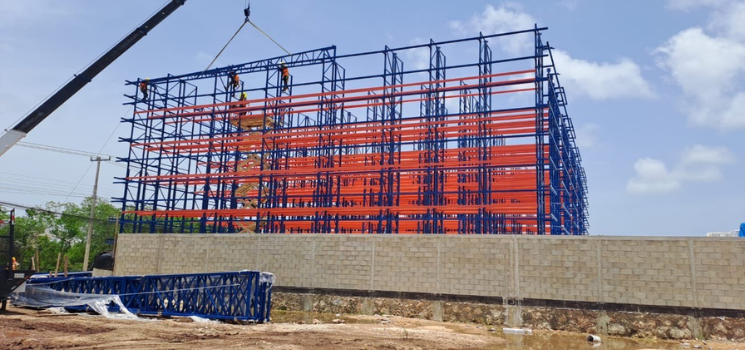
Unlike conventional buildings, these facilities use the racking structure itself as the core support for the roof and walls. This
innovative integration of storage and building design delivers unmatched efficiency, making it one of the fastest-growing solutions in industrial storage.
In this article, we’ll explore the
benefits of rack-supported warehouses, their applications, and why they are transforming large-scale storage operations worldwide.
What Is a Rack-Supported Warehouse?
A rack-supported warehouse, also called a
self-supporting warehouse, is a facility where the racking system serves not only as storage but also as the
structural skeleton of the building.
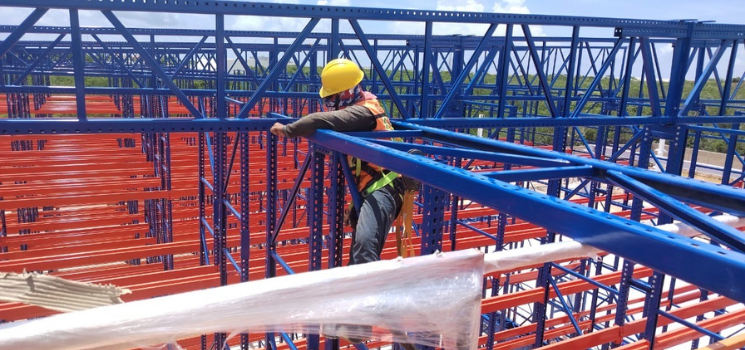
Instead of constructing walls and then installing racks, the racks are erected first, and the external envelope (walls, insulation, and roof) is attached directly to them. This design maximizes
vertical and cubic storage space, reduces construction costs, and integrates automation seamlessly.
Key Benefits of Rack-Supported Warehouses
1. Maximum Space Utilization
The main advantage is the ability to use the
entire volume of the building. Since racks serve as both storage and structure, there are no wasted areas for additional supports. Facilities can reach heights of
30 meters or more, dramatically increasing storage density.
2. Lower Construction Costs
Because the racks act as the frame of the building, companies save on construction materials and labor. This can reduce
capital expenditure (CAPEX) by up to 20% compared to traditional warehouses.
3. Scalability and Flexibility
Rack-supported warehouses can be designed for
current needs while allowing future expansions. This is particularly valuable for industries where demand fluctuates, such as e-commerce, cold storage, and retail distribution.
4. Seamless Automation Integration
These warehouses are ideal for
AS/RS (Automated Storage and Retrieval Systems), conveyors, and shuttle systems. By integrating automation from the start, companies reduce manual handling, improve safety, and boost productivity.
5. Faster Construction Time
Traditional warehouses can take years to build, while rack-supported warehouses are often completed in months. This faster time-to-market provides a competitive advantage, especially in regions with rapid demand growth.
6. Enhanced Safety Standards
Because they are engineered with structural precision, rack-supported warehouses comply with strict seismic, fire safety, and load-bearing regulations. Many are designed with
redundant stability systems, ensuring resilience against extreme conditions.
Real-World Applications
-
- Cold Storage & Food Industry: High-density storage of frozen goods where temperature control is critical.
- E-Commerce & Retail: Large SKU volumes with automation to handle order picking at scale.
- Pharmaceuticals: Controlled environments with strict compliance needs.
- Automotive: Bulk storage of parts and components for manufacturing supply chains.
Global Relevance
Countries with
limited land availability and rising real estate costs—like the U.S., Mexico, Germany, and Japan—are increasingly adopting rack-supported warehouses. According to the
Food Logistics Report, rack-supported facilities are set to grow significantly as companies seek to maximize efficiency in both urban and suburban hubs.
Meanwhile, organizations such as
MHI (Material Handling Industry) emphasize that rack-supported systems align with the future of
smart warehouses, integrating robotics, AI, and IoT to enable predictive supply chain management.
Rack-supported warehouses are frequently highlighted in
industrial engineering journals as a benchmark for efficiency. For example, the
MHI Warehousing & Distribution Center Report underscores how self-supporting designs accelerate automation adoption while lowering costs. Similarly,
Food Logistics notes their growing role in cold chain sustainability, as they require less energy per pallet compared to traditional builds.
Conclusion
Rack-supported warehouses offer more than just a way to store goods — they provide a scalable, cost-effective, and efficient solution that can transform large-scale storage operations. By integrating structural support with racking systems, businesses reduce construction costs, maximize vertical space, and prepare their facilities for automation and future growth.
At
RackUSA, we specialize in designing and implementing advanced storage systems tailored to your unique operational needs. Whether you’re looking to optimize efficiency, improve safety, or prepare your warehouse for long-term scalability, our team delivers solutions that drive measurable results.
FAQs
1. Are rack-supported warehouses more expensive to maintain?
No. While the upfront investment may be higher, they typically reduce
maintenance and energy costs over the long term due to efficient design.
2. Can rack-supported warehouses be automated later?
Yes, but it is more cost-effective to integrate automation during initial construction. Retrofitting is possible but may require structural adjustments.
3. How tall can these warehouses be built?
Most range from 20 to 40 meters, depending on local regulations, soil conditions, and seismic considerations.
4. Are they suitable for all industries?
They are best for industries with
large-scale, high-volume, or temperature-sensitive storage needs, but can be adapted to most supply chains.
5. What’s the main difference from a conventional warehouse?
In a conventional warehouse, racks are installed inside a separate structure. In rack-supported warehouses, the
racks are the structure, maximizing cubic efficiency.

 Racking
 Selective: Roll-Formed
 Selective: Structural
 Cantilever
 Dynamic: Carton-Flow
 Dynamic: Pallet-Flow
 Dynamic: Push-Back
 Pallet Shuttles (CS)
 Mezzanine | Pick Modules (CS)
 Rack Supported Buildings (CS)
 Gravity Conveyor (CS)
 Drive-In | Drive-Thru (CS)
 Shelving
 Shelving: Boltless Tab Rack
 Services