The industry has evolved in recent years. Companies face constant challenges: reducing operating costs, speeding up delivery times, and maintaining efficiency at every link in the supply chain. End customers demand speed, accuracy, and immediate product availability.
Given this scenario, a key question arises: how can companies respond to these demands without compromising service quality? The answer lies in innovative strategies that eliminate bottlenecks and optimize resources.
Cross-docking represents a disruptive solution that completely transforms the way goods are handled within the logistics chain.
What is cross-docking?
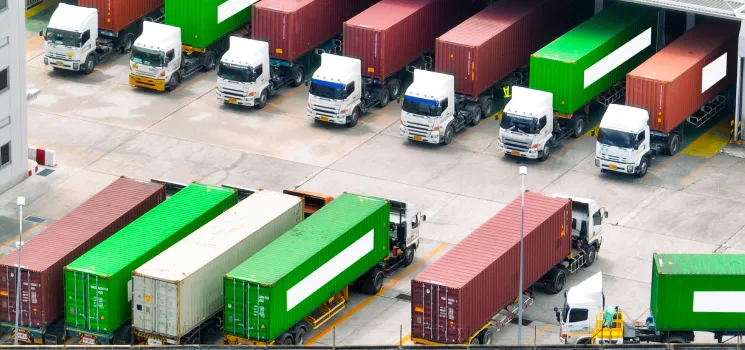
Cross-docking is a logistics strategy that allows goods to be distributed to their final destination without the need for prolonged storage. Products arrive at the logistics center, are sorted on transfer platforms, and are shipped to customers within hours. This technique eliminates traditional intermediate storage. Goods from different suppliers converge at a central point (cross dock), where they are regrouped according to specific orders and continue their journey to stores, factories, or end consumers. Speed is the differentiating factor. While conventional methods can hold inventory for weeks or months, docking allows items to pass through the facility in less than 24 hours.
Main objectives of cross-docking
- Minimize storage costs. By reducing the time products remain in the facilities.
- Speed up distribution. Guarantees faster deliveries to the end customer.
- Reduce handling. Limits the number of times goods are touched.
- Optimize transportation. Consolidates full loads to maximize the efficiency of each route.
- Improve turnover. Crucial for perishable or high-turnover products.
How does cross-docking work?
The process requires synchronization between suppliers, carriers, and warehouse staff. Each stage must be executed with precision to maintain the continuous flow that characterizes this methodology. Real-time coordination is essential to avoid delays that could compromise the entire operation.
Receipt of goods
Vehicles arrive at the unloading dock according to a pre-established schedule. Staff verify documentation, inspect product quality, and confirm quantities against purchase orders. This verification must be quick but thorough, applying
warehouse safety principles that protect both staff and cargo.
Received goods are scanned into the management system, triggering automatic alerts that indicate their next destination.
Cross Dock
Here, products are moved from the receiving area to the shipping areas without stopping at
storage racks.
Warehouse signage makes it easy for operators to quickly identify which door each pallet should be directed to.
During this phase, items can be regrouped, combined with other orders, or transferred directly to the outgoing vehicle. Preparation is carried out according to each customer's specifications.
Final dispatch and distribution
Once the load has been consolidated, the trucks depart for their assigned routes. The efficiency lies in the fact that each vehicle transports complete, organized orders that are ready for immediate delivery. This method contrasts with traditional systems where inventory waits for days before being processed.
Phases of cross-docking
- Advance planning: prior coordination with suppliers on schedules and volumes.
- Scheduled reception: synchronized arrival of transports according to time slots.
- Immediate sorting: separation and regrouping of products according to destinations.
- Order consolidation: assembly of complete loads to optimize transport.
- Expedited dispatch: departure of goods to their final destination within hours.
Types of cross-docking and their applications
The way cross docking is applied depends on the flow of goods, the predictability of demand, and the available infrastructure. Each company must evaluate which one best suits its operational structure, cargo volume, and the type of products it handles.
Pre-distributed cross-docking
Goods arrive at the dock already sorted and labeled according to their final destination. The supplier does the prep work, making it easy for the warehouse to simply redistribute to outgoing vehicles. Applications: Retail chains that receive products directly from manufacturers to specific branches. Ideal during peak season when volume increases exponentially.
Consolidated cross docking
Multiple suppliers send products that are combined at the logistics center to form complete orders. This method requires greater coordination but optimizes transportation. Applications: distributors who gather items from different manufacturers to deliver complete assortments to customers. Companies that implement an agile picking system can execute this variant efficiently.
Hybrid cross-docking
Combines elements of both previous models. Some products arrive pre-distributed, while others require consolidation. This flexibility allows adaptation to complex operational realities where different types of supply coexist. Applications: operations that handle both high-turnover products and seasonal items that require special preparation.
Examples of cross-docking
A supermarket chain receives fresh produce from local farms daily. Instead of storing them, cross docking sorts the food according to each store and ships it before noon. Customers enjoy fresh perishable products while the company minimizes losses due to expiration.
Benefits of cross-docking
- Cost reduction
- Speed of delivery
- Less damage to products
- Space optimization
- Greater flexibility
- Inventory reduction
Steps on how to implement cross-docking in your warehouse
For cross-docking to work, planning is key: infrastructure, systems, and equipment must work under the same operational flow.
Assessment of demand and reception times
The first step is to analyze order patterns, frequency of goods arrival, and delivery windows to customers. This information reveals whether the business has the volume and predictability necessary for the dock to generate real value.
Before implementing cross docking, it is necessary to analyze at which points in the process prolonged storage does not add value and only delays the departure of goods.
Adapting infrastructure with industrial racks
Although the goal is to minimize storage, certain s
torage solutions enhance the efficiency of the process.
Selective racks allow for the temporary organization of products awaiting consolidation, facilitating immediate access.
For operations that handle small items,
carton flow racks streamline order preparation using gravitational systems that automatically present the next item.
Pallet flow racks work similarly with full loads, ideal for high-turnover products.
When vertical space is limited,
mezzanine racks double the usable area without expanding the building's footprint. This solution is especially valuable in urban areas where land is expensive.
Integration of technology and management systems
Modern WMS (Warehouse Management System) software tracks each item from arrival to departure. These systems generate precise instructions on where to place each product, what to combine, and when to ship. Warehouse optimization depends on these digital tools that coordinate multiple suppliers and carriers simultaneously. Without real-time visibility, executing cross-docking is virtually impossible.
Staff training
The operational team needs to work quickly, but with clear processes that prevent errors in handling merchandise. Specific training on logistics processes, scanner handling, signal interpretation, and safety protocols ensure flawless execution. The human factor determines the success or failure of this strategy. Motivated and trained employees can identify continuous improvements that consistently increase operational efficiency.


 Racking
 Selective: Roll-Formed
 Selective: Structural
 Cantilever
 Dynamic: Carton-Flow
 Dynamic: Pallet-Flow
 Dynamic: Push-Back
 Pallet Shuttles (CS)
 Mezzanine | Pick Modules (CS)
 Rack Supported Buildings (CS)
 Gravity Conveyor (CS)
 Drive-In | Drive-Thru (CS)
 Shelving
 Shelving: Boltless Tab Rack
 Services