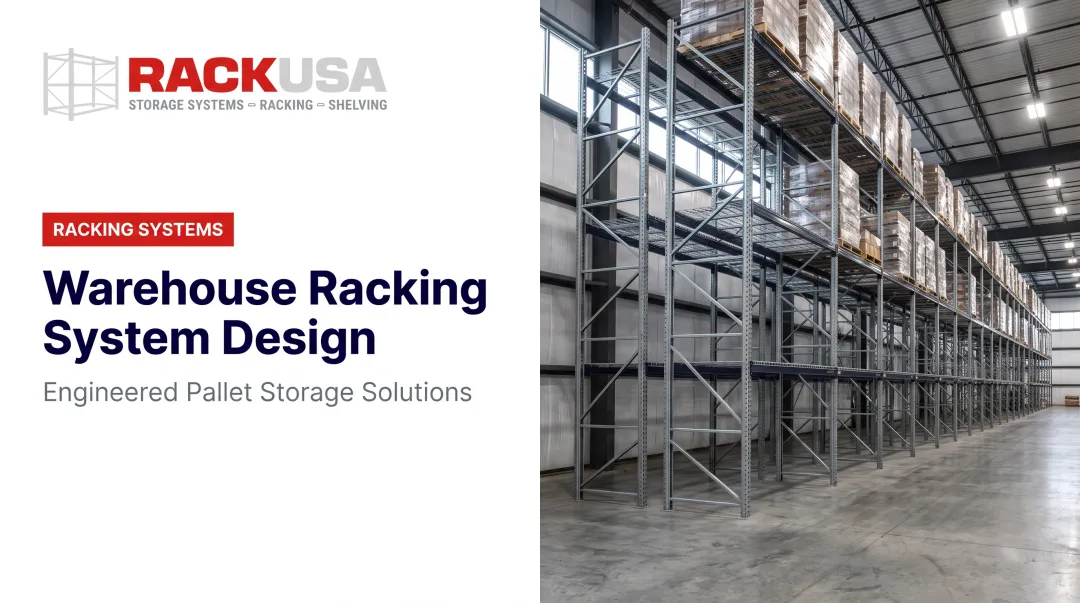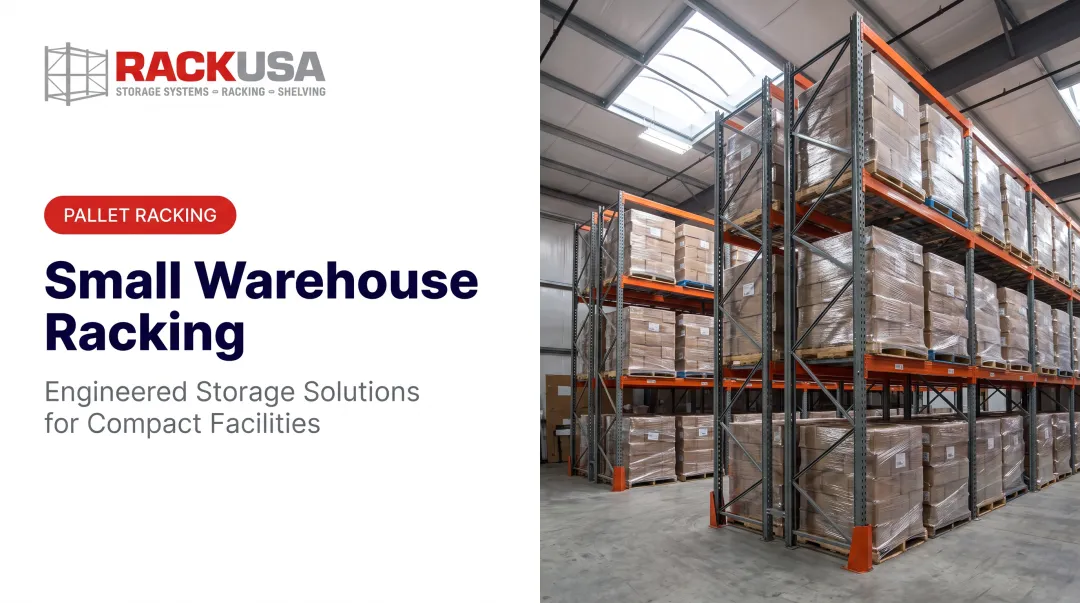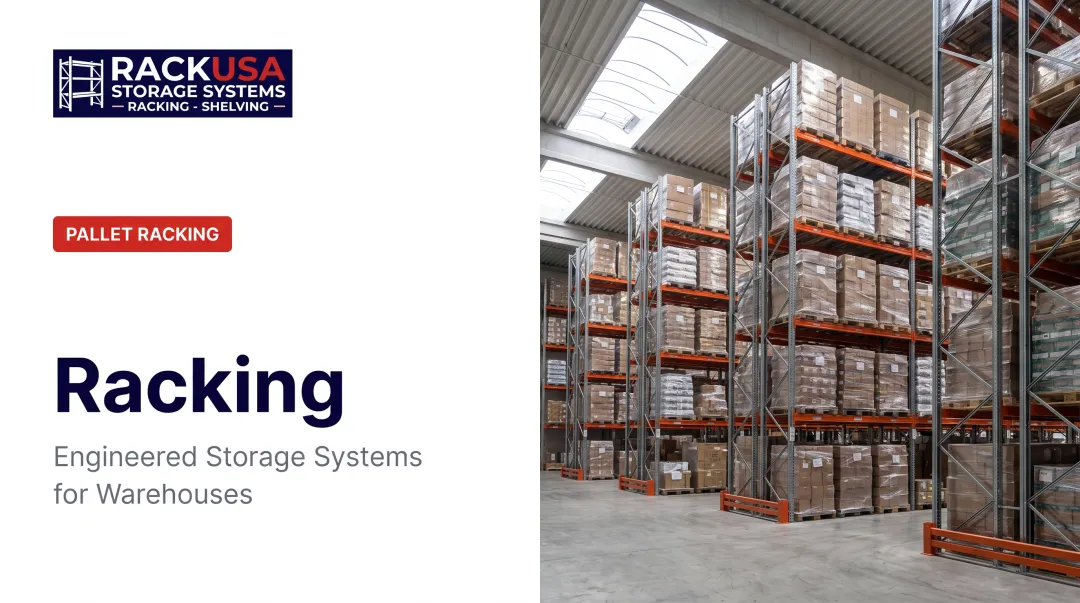

This scenario plays out in warehouses across the country more often than most operators realize. The Rack Manufacturers Institute identifies motorized-vehicle impacts, including forklift strikes, as one of the leading causes of accidental rack damage, with the column area below the first beam level taking the brunt of it. Even minor, seemingly harmless contact can be enough to compromise a column's rated capacity.
Unprotected racking puts employees, inventory, and structural integrity on the line every day. Most facilities only take protection seriously after something has already gone wrong. This guide covers what rack protection actually is, why it matters, the main types available, how to choose the right combination, and the regulations that shape a protection program.
Key Takeaways
- Match protection to the zone: damage concentrates at column bases, row ends, and cross-aisles.
- OSHA and ANSI don't mandate a specific guard, but both define "reasonable protection" in inspections and claims.
- Column guards, end-of-row barriers, rails, netting, and safety panels each cover a different risk zone.
- Retrofitting protection onto existing racking is standard practice and doesn't require replacing the system.
- A facility assessment is the fastest way to identify which zones need protection first.
What Is Rack Protection?
Rack protection refers to physical safeguards, guards, barriers, and guard rails installed on or around pallet racking to absorb or deflect impact from forklifts and other equipment. The goal is straightforward: keep the rack's structural integrity and rated load capacity intact by preventing contact from ever reaching the steel.
Protection and repair are not the same job:
- Rack protection is proactive—installed before impact so damage never starts.
- Rack repair is reactive. It restores components that are already bent, cracked, or compromised.
A bent or damaged column should always be repaired before a guard goes on top of it. Bolting a protector onto damaged steel doesn't restore lost load capacity. It only hides a problem that's still there.
RackUSA builds MHI R-Mark-certified selective roll-formed racking and matching safety accessories—column protectors, corner protectors, end-row guards, and safety panels—so protection is specified with the system, not bolted on as an afterthought.

Why Racking Protection Matters: Key Benefits
Employee Safety Comes First
A struck or weakened column doesn't need to fail immediately. It can hold for weeks under normal load and then give way without warning, triggering a partial or full rack collapse.
Forklifts remain a significant source of workplace harm nationally. The National Safety Council recorded 84 forklift-related deaths in 2024, along with 25,110 recordable injury cases and 15,460 cases involving days away from work across 2023-2024 combined, according to NSC's Injury Facts data on forklift safety.
These figures cover all forklift-related work injuries, not warehouse racking incidents specifically, but they underscore how much is riding on equipment operating safely around fixed structures.
Protects Capital Investment
Racking is not a small line item. It's a long-term structural investment, and RMI notes that even minor contact can require expensive repair or full replacement of damaged sections. Unprotected systems tend to accumulate a steady stream of small repair jobs that add up faster than a one-time investment in guarding would have cost.
Preserves Inventory and Productivity
A damaged bay isn't just a structural issue. It's an operational one. Consider what happens when a collapse occurs:
- Destroys or damages the product stored on that bay
- Shuts down the aisle for cleanup, inspection, and repair
- Disrupts picking, receiving, and shipping schedules tied to that zone
- Forces a scramble to relocate inventory to other storage areas
Supports a Broader Safety Posture
Visible, well-maintained guards send a signal beyond the warehouse floor. They demonstrate that known hazards, like forklift traffic near structural steel, have been proactively addressed rather than ignored until an incident forces the issue.
Types of Pallet Rack Protection Systems
Rack damage doesn't spread evenly across a facility. It concentrates in specific zones: column bases, row ends, cross-aisles, and areas with tight forklift maneuvering. That's why protection is selected by location and exposure, not as a single universal product applied everywhere.
Column Guards and Post Protectors
These shield the lower portion of upright frames, right where forklift forks and wheels most often make contact. RMI describes several common forms:
- Formed-steel plates that wrap around column faces
- Free-standing guards anchored to the floor
- Guards bolted, riveted, or welded directly to the upright
RackUSA supplies column guards and post protectors built to reinforce upright frames against forklift impacts, in steel or high-density polyethylene depending on the application. Spec choice depends on the frame profile and traffic pattern at each location.
End-of-Row and End-of-Aisle Protection
End-of-row protectors guard the most exposed frames in the building, the ones sitting at aisle intersections where forklifts turn, back out, or travel at higher speed. Damage here is particularly dangerous because a bent end frame can compromise stability down the entire row.
RackUSA's end-row protectors are heavy-duty barriers available in single or double horizontal bar configurations, sized for high-traffic forklift zones at aisle ends and intersections.

Guard Rails, Bollards, and Down-Aisle Protection
Guard rails and bollards protect the space around the rack—not the uprights themselves. They define narrow aisles, walkways, and building-column clearances, guide forklift travel, and keep pedestrians clear of moving equipment.
ProGMA guidance points to bollards as an effective solution for targeted protection of individual rack legs, structural columns, and personnel-access points.
RackUSA's warehouse guard rails and gates create defined pedestrian-protection zones across warehouse floors, mezzanines, and pick modules, complementing the row and column guards used on the racking itself.
Wire Mesh, Safety Netting, and Fall Protection
Wire mesh, netting, and safety panels prevent stored product from falling off top-level beams or through the sides and back of racks. This matters most in narrow-aisle operations and multi-level pick modules where employees regularly work below stored loads.
RackUSA manufactures welded-steel wire mesh decking and rack safety panels in-house, positioned at the rear, sides, or aisle ends depending on where fall protection is needed. The open-grid design also allows sprinkler water to pass through unobstructed, which matters for fire code compliance.
Dock Door and Specialty Guarding
Racking near dock doors sits in some of the heaviest, tightest traffic in any facility: trucks backing in, pallet jacks crossing constantly, and forklifts staging loads. The same core toolkit applies:
- Column protectors
- Corner protectors
- End-row barriers
- Guard rails
Apply each with extra attention to dock clearances and traffic flow.
Choosing the Right Rack Protection: Materials and Design Factors
Picking the right guard isn't a one-size decision. It depends on impact frequency, available clearance, and how much force a given zone typically sees.
Steel vs. polymer options:
| Material | Best suited for | Trade-off |
|---|---|---|
| Heavy-gauge welded steel | High-impact zones (aisle ends, dock areas) | Greater durability, higher install cost |
| Molded polyethylene / polymer | Lower-impact areas | Faster install, lower cost; less durable under repeated heavy hits |
Floor-anchored vs. bolt-on:
- Floor-anchored guards transfer impact force into the floor slab rather than the rack, offering stronger protection but requiring more labor and floor prep.
- Bolt-on guards install faster and cost less upfront, but some impact force still transfers into the column itself.
Profile considerations: Protruding guards stand off from the column to absorb impact at a distance, which works well for drive-in and push-back racks.
In narrow-aisle layouts, flush, low-profile guards preserve the clearance forklifts need to operate safely. RMI specifically cautions that floor-anchored guards in restricted aisles can create clearance problems if not sized correctly.

Guard height and steel gauge should match each zone's actual traffic and impact history. Save the tallest, heaviest-gauge guards for your highest-risk locations rather than spreading a uniform spec across the whole facility.
Where to start: Begin with a facility assessment to flag the highest-risk zones—aisle ends, dock doors, and narrow aisles—then phase the rollout by risk and budget.
RackUSA's technical team includes this kind of evaluation at no cost in its quote and consultation process. Recommendations cover column protectors, corner guards, end-row barriers, and safety panels matched to real traffic flow and layout.
Regulations and Compliance for Racking Protection
OSHA doesn't mandate a specific rack guard product. Instead, employers are held to the General Duty Clause of the OSH Act, which requires a workplace "free from recognized hazards that are causing or are likely to cause death or serious physical harm."
Storage-specific rules under 29 CFR 1910.176 reinforce this. They require clear aisles, sufficient clearance for mechanical handling equipment, and stable, secured material storage.
ANSI MH16.1-2023, the consensus standard for the design, testing, and use of industrial steel storage racks, is referenced directly by the International Building Code. It matters here because column damage directly affects a rack's rated capacity.
Under Section 4.4 of the standard, owners must have procedures that identify visible damage or conditions affecting structural performance. Damage near the base is treated as more critical than an equivalent dent higher up the column.
Industry bodies add another layer of guidance beyond the legal minimums:
- MHI and RMI publish best-practice recommendations on column and end-of-aisle protection, plus routine inspection guidance.
RackUSA is an MHI member company holding MHI R-Mark Certification (RMI Certification #5190) for its cold-formed steel racking systems, confirming compliance with ANSI MH16.1.
None of this replaces good habits on the floor. Regular rack safety inspections, documented maintenance, and operator training all work alongside physical guarding, not instead of it. A guard on a column that's never inspected is only half a safety program.
Partnering with RackUSA for a Complete Rack Protection Program
RackUSA has manufactured storage-rack systems since 1972 from its facility in Gómez Palacio, Durango, Mexico. Over five decades, that base has grown into a cross-border operation with offices and warehouses across the United States and Mexico, plus representation in Guatemala, El Salvador, and Costa Rica.

When you buy a rack protection setup from RackUSA, engineering, install, and follow-on support come bundled with the equipment—not as separate service contracts. For a facility manager comparing options, that usually covers:
- Layout and load guidance so guards go where impact risk is real
- MHI R-Mark-certified racking (ANSI MH16.1) plus column guards, end-row protectors, corner guards, guard rails, and wire mesh panels
- Install crews that add protection on new builds or live systems with minimal downtime
- Product-tied rack repair and damage checks that catch problems before they escalate
Unsure where to start on the floor? Reach out to RackUSA at sales@rackusa.com or (800) 267-8197 for a protection quote and system recommendations.
Frequently Asked Questions
What is a rack protector?
A rack protector is a guard or barrier on or near racking that absorbs forklift impact and protects columns and frames. Common types include column guards, corner protectors, and end-row barriers.
What regulations cover racking?
OSHA's General Duty Clause and 29 CFR 1910.176 require safe clearances and secure storage. ANSI MH16.1 sets design and testing standards for steel racking. Neither mandates a specific guard, but both define best practice.
How much does pallet rack protection cost?
Cost varies by guard type, material, size, and installation method (floor-anchored vs. bolt-on). RackUSA offers custom quotes based on facility layout and traffic patterns rather than fixed pricing.
Where should rack protection be installed first?
Prioritize the highest-traffic, highest-risk zones: end-of-aisle positions, dock doors, and narrow aisles where forklifts turn or maneuver frequently. A facility assessment helps pinpoint these areas quickly.
How often should rack protectors be inspected?
Check rack protectors during routine rack safety inspections—damage isn't always obvious at a glance. Repair or replace any guard with cracks, bends, or looseness right away.
Can rack protection be added to an existing racking system?
Yes. Most guards, rails, and safety panels are designed for standard beam and frame dimensions and can be retrofitted onto existing racking without replacing the system. Custom sizing is available for non-standard setups.