
Picking the wrong one isn't just an inconvenience. It affects safety, forklift damage rates, downtime, and how much you spend on repairs over the next decade. RackUSA has manufactured both structural and roll-formed racking systems for over 50 years, and this comparison is one of the first questions warehouse operators ask before finalizing a layout.
Here's how to tell them apart and choose correctly.
TL;DR
- Structural racking: bolted, hot-rolled steel built for heavy loads and forklift impact
- Roll-formed racking: boltless, cold-rolled steel built for affordability and quick reconfiguration
- Higher upfront cost for structural usually pays off in longer service life and fewer repairs
- Faster install and easier reconfiguration make roll-formed a fit for changing SKU profiles
- Match the system to load weight, forklift traffic, environment, and layout-change frequency—many sites run a hybrid mix by zone
Structural vs. Roll-Formed Racking: Quick Comparison
Cost
Structural racking costs more upfront. Heavier steel and bolted installation require more material and skilled labor. Roll-formed racking ships faster and installs quicker, keeping costs down from the start.
Composition
- Structural: Hot-rolled, low-gauge channel steel with bolted connections
- Roll-formed: Cold-rolled, higher-gauge steel with boltless pin/clip connectors
Load Capacity
Capacity depends heavily on beam span, upright profile, and configuration, so there's no single universal number.
RackUSA's standard selective racking generally handles 2,000 to 6,000 lbs per level, while heavy structural systems exceed 6,000 lbs per level.
Industry capacity charts show similar patterns, according to Ridg-U-Rak's pallet rack specifications:
- Structural beams: roughly 1,700 lbs at longer spans up to 15,000+ lbs at shorter spans
- Roll-formed teardrop beams: under 1,000 lbs to as much as 18,000 lbs per pair, depending on span and gauge

Final numbers always require system-specific engineering.
Durability & Impact Resistance
The Rack Manufacturers Institute (RMI) identifies forklift impact as one of the most common causes of rack damage, and notes that structural steel generally resists impact loads better because it's heavier and thicker. Roll-formed steel, being thinner, is more prone to dents and bends from collisions.
Adjustability & Lead Time
| Factor | Structural | Roll-Formed |
|---|---|---|
| Lead time | Longer | Shorter |
| Reconfiguration | Harder, bolted | Easy, snap-together |
| Best for | Fixed layouts | Changing layouts |
What is Structural Racking?
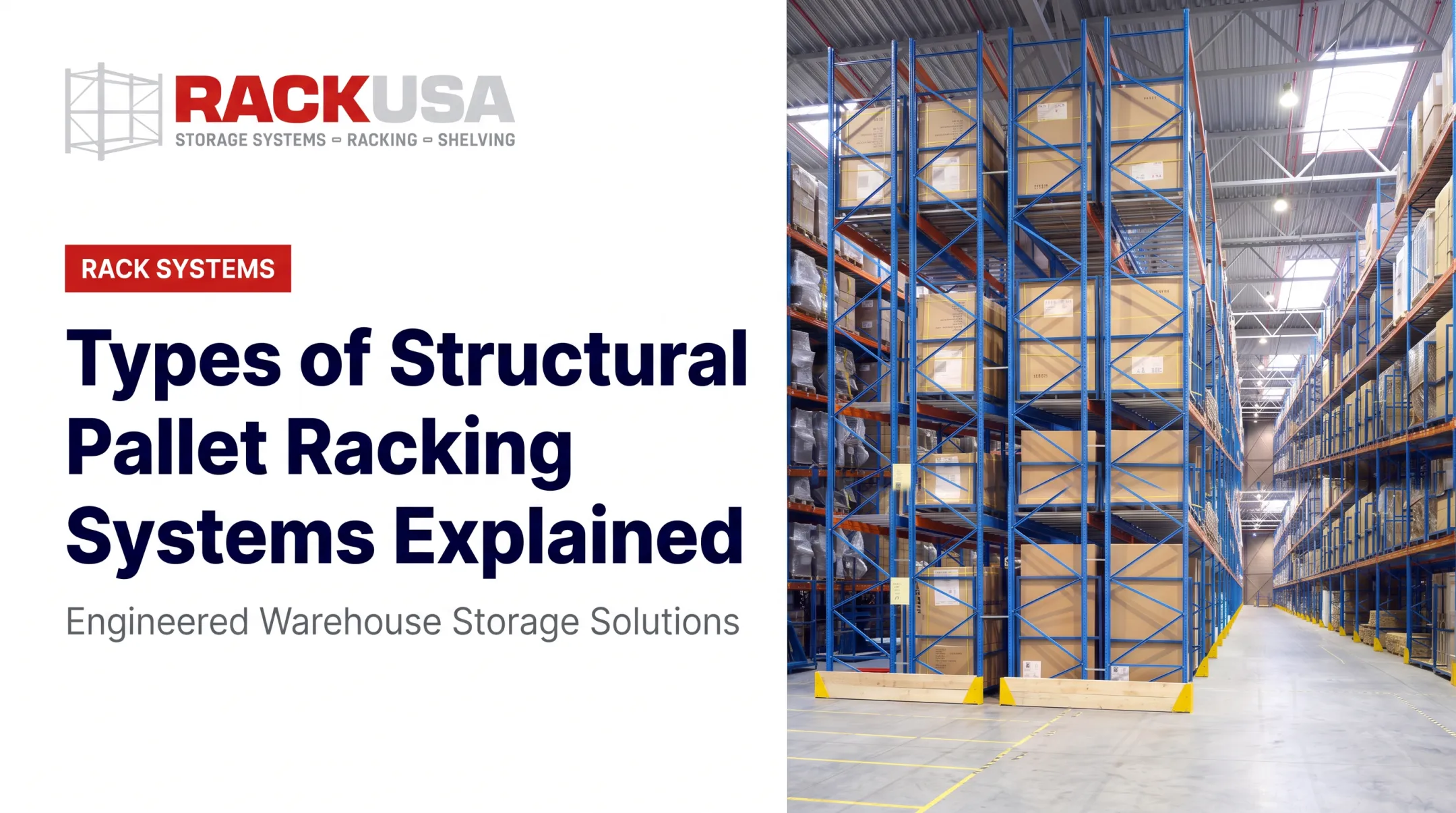
Structural racking is built from hot-rolled channel steel with bolted connections between beams and frames. Manufacturers engineer it specifically for high-capacity, high-impact environments where forklift collisions happen regularly. Core benefits:
- Superior load capacity for heavy palletized goods
- Withstands forklift impact without bending or failing
- Holds up in washdown and cold storage conditions
- Longer service life, which reduces long-term replacement costs RackUSA's structural line uses heavy-gauge steel designed for constant forklift activity. It works with drive-in, drive-through, and push-back configurations, plus integrations like mobile bases and cantilever supports.

Use Cases of Structural Racking
Structural racking fits best in:
- Food and beverage distribution centers
- Cold storage facilities with washdown requirements
- 3PL operations with heavy, near-constant forklift traffic
- Drive-in and drive-through systems needing rigid support RackUSA's engineering team provides structural load analysis and PE-stamped drawings as part of project support, along with seismic analysis, concrete testing, and permitting assistance. Facility clear height, seismic zone, and actual pallet weights all affect what capacity the rack can safely deliver. Heavy structural systems typically exceed 6,000 lbs per level, though final ratings depend on the specific installation.
What is Roll-Formed Racking?
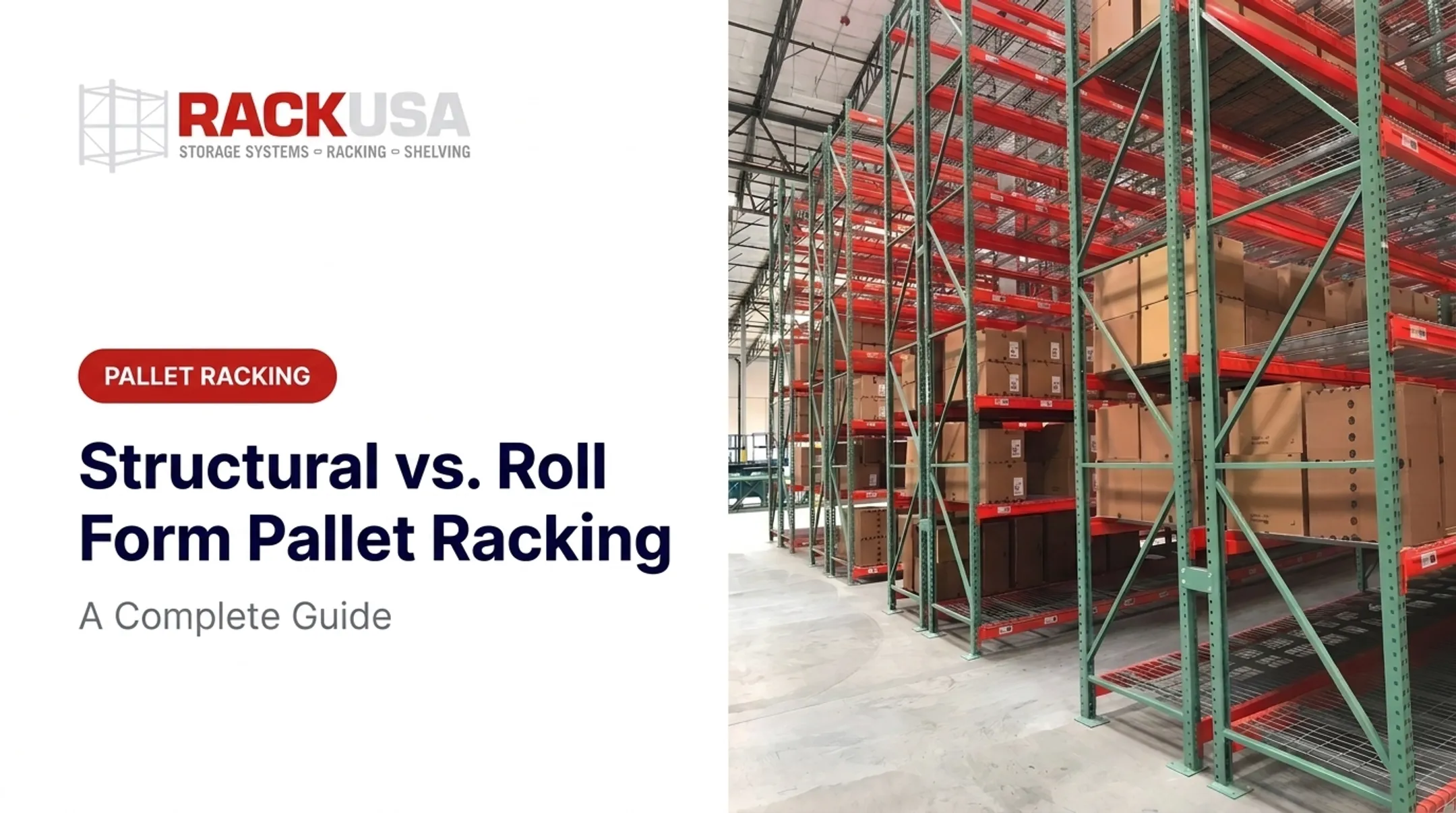
Roll-formed racking uses cold-rolled, lighter-gauge steel with boltless beam connectors that pin or clip into place. It's built for speed and flexibility rather than raw impact resistance.
Core benefits:
- Lower upfront cost
- Fast installation with no bolting required
- Easy reconfiguration when SKU profiles change
- Shorter lead times than structural systems
Heavier-gauge roll-formed options do exist for moderate load increases. But once loads or impact frequency exceed the standard range, structural is the safer bet.

Where Roll-Formed Racking Fits Best
Within those lighter-duty bounds, roll-formed racking works well for:
- Retail stockrooms with lighter, varied inventory
- E-commerce fulfillment centers with frequent SKU turnover
- Light-to-moderate load selective racking projects
- Seasonal inventory operations needing quick reconfiguration
Demand for this kind of flexibility is climbing. E-commerce made up 23.2% of total US retail sales in Q3 2024, with CBRE projecting 25% by the end of 2025.
Third-party logistics providers have captured more than 30% of large-scale US bulk leasing activity since the pandemic began, per the same CBRE research. Facilities juggling shifting SKU counts need racking that can adjust just as fast.
Structural vs. Roll-Formed: Which Is Better for Your Warehouse?
There's no universal winner. Choose based on these four factors:
- Load weight — Heavier pallets favor structural rack
- Traffic and operator risk — Busy aisles and less-experienced crews raise impact exposure
- Environment — Cold storage and washdown zones favor structural durability
- Layout change frequency — Frequent reconfigs favor roll-formed speed
Choose structural for heavy loads, cold storage, drive-in systems, or high-impact zones.
Choose roll-formed for lighter loads, fast-changing SKUs, and budget-conscious selective rack projects.
Many operators land in the middle. Hybrid racking—structural frames with roll-formed beams—balances rigidity and cost. RackUSA configures hybrid systems around your load profile and budget, so you are not forced into an all-or-nothing choice.
Real-World Application: Matching Racking to Warehouse Conditions
Picture a distribution facility running roll-formed racking across its entire floor. Over time, the high-traffic aisles near receiving and shipping start showing dented uprights and bent beams from repeated forklift contact. Repairs pile up. Downtime creeps in. Safety inspectors flag bowed frames during routine audits.
The real problem is a mismatch between rack type and traffic conditions in specific zones. A hybrid layout often solves it:
- Structural racking in high-impact zones near dock doors and main forklift lanes, where collision resistance matters most
- Roll-formed racking in lower-traffic picking areas, where reconfiguration speed is the priority

This aligns with what RMI's research shows: structural steel generally resists impact loads better than lighter roll-formed steel, which is exactly what's needed where collisions happen most often.
A facility-wide, one-size-fits-all decision often isn't the most cost-effective approach. Matching rack type to zone-specific conditions—heavy structural where impacts are frequent, roll-formed where flexibility matters—tends to deliver stronger ROI than picking one system for everything.
If you're seeing repeated damage in specific zones of your warehouse, RackUSA's engineering team can assess your facility and recommend the right structural, roll-formed, or hybrid mix.
Conclusion
Neither structural nor roll-formed racking is universally "better." The right choice comes down to load requirements, environmental conditions, and how often your layout changes.
Many warehouses get the best results from a mix of both:
- Structural where forklift traffic and impact risk are high
- Roll-formed where speed and adjustability matter more
Getting this decision right protects worker safety, cuts long-term maintenance costs, and keeps product moving efficiently. RackUSA's turnkey design, engineering, and installation services can help you match the right configuration to your facility.
Frequently Asked Questions
Does OSHA require pallet racking to be anchored?
OSHA requires materials to be secured against sliding or collapse, but does not explicitly mandate rack anchoring. RMI industry guidance recommends anchoring all rack columns to the floor per manufacturer and engineering specifications.
What is the main difference between structural and roll-formed pallet racking?
Structural racking uses hot-rolled steel with bolted connections, built for heavy loads and impact resistance. Roll-formed racking uses cold-rolled steel with boltless clip connectors, prioritizing lower cost and fast reconfiguration.
Is structural racking more expensive than roll-formed racking?
Yes. Structural racking costs more upfront due to heavier materials and more complex installation. That premium often pays off long-term through fewer repairs and a longer service life in high-impact environments.
Can structural and roll-formed racking be combined in the same warehouse?
Yes. Hybrid setups can combine structural frames with roll-formed beams so each zone gets the right rack type for its traffic and load conditions, balancing cost and durability.
How long does structural racking last compared to roll-formed racking?
Per RMI research, industrial steel racking often lasts decades with proper maintenance; lifespan depends more on load, traffic, and environment than construction type. Structural racking's impact resistance usually means fewer damage-related replacements over time.
Which racking type is better for cold storage or food warehouses?
Structural racking is typically the better fit for cold storage and food-grade environments. Its heavier steel construction holds up better under washdown conditions, temperature extremes, and the frequent forklift traffic common in these facilities.